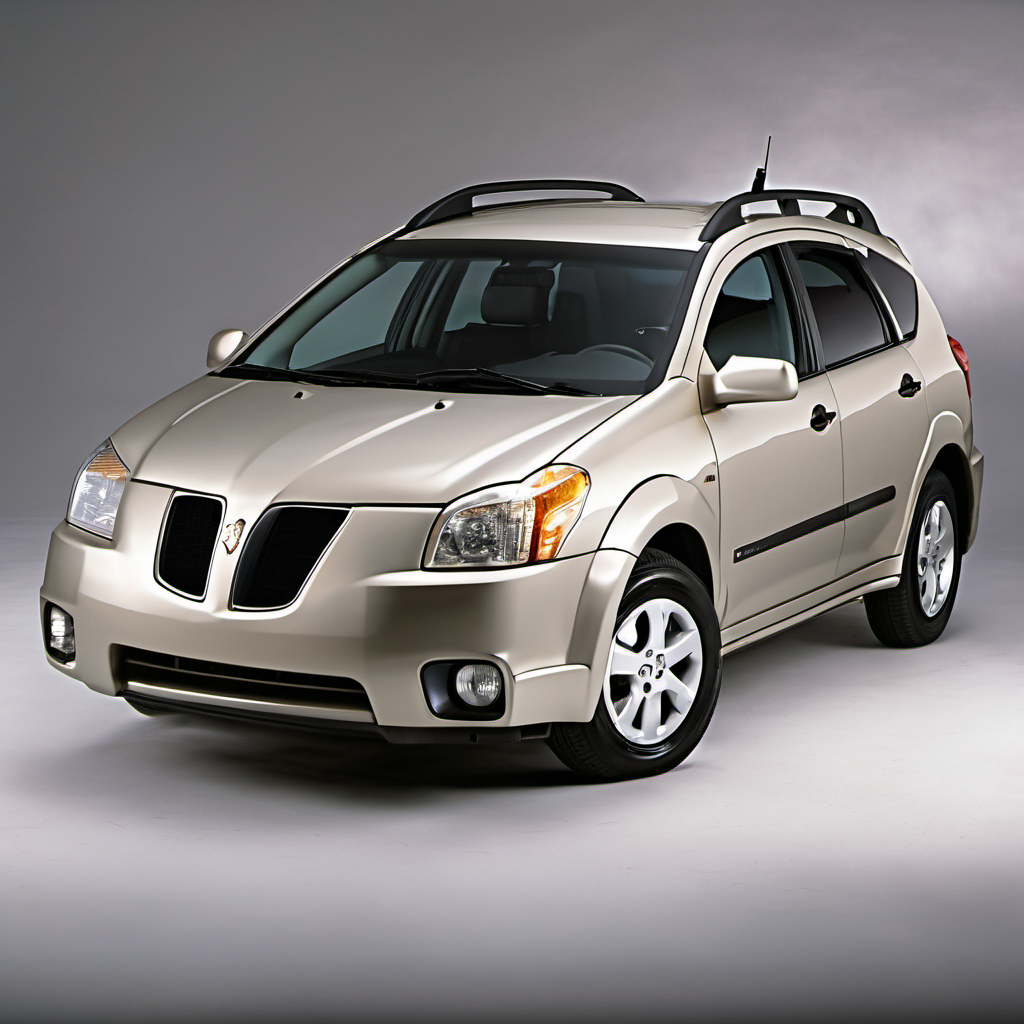
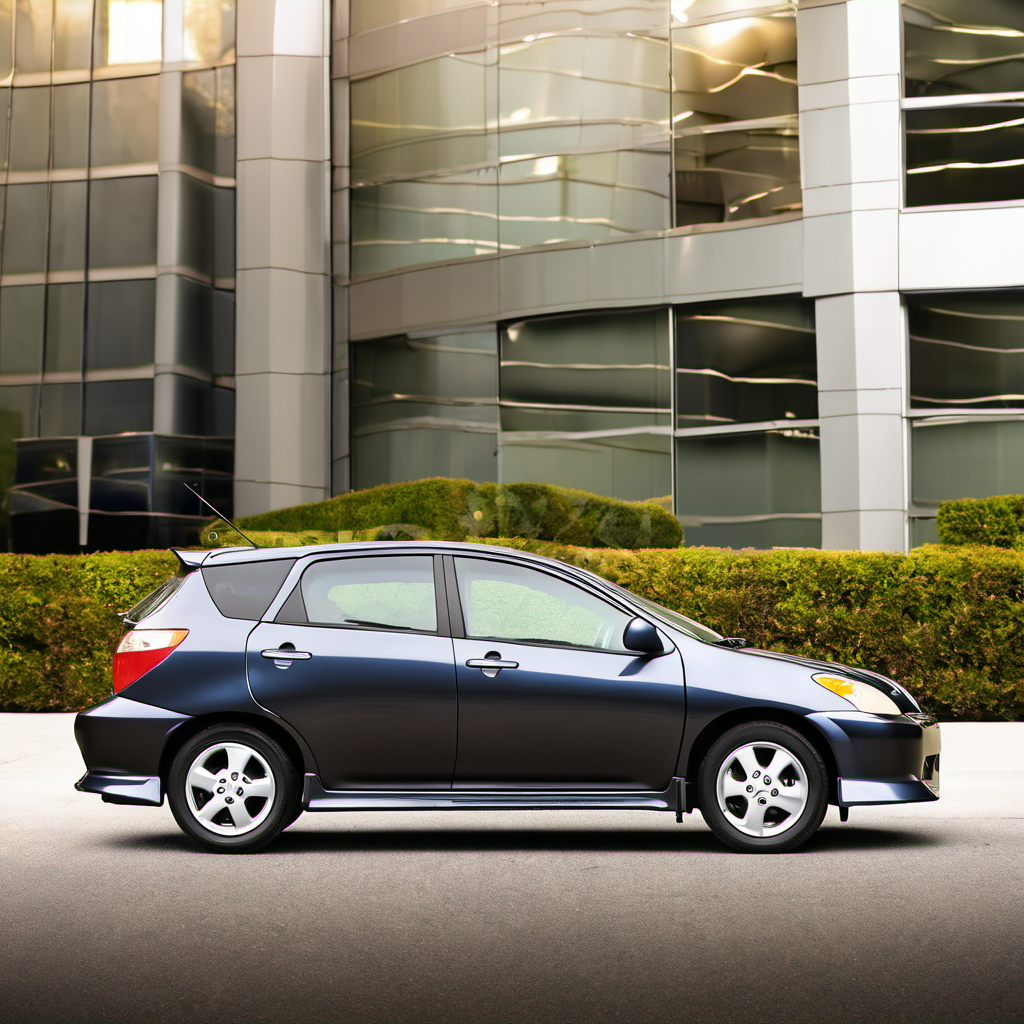
2003 Pontiac Vibe Wagon

2003 Pontiac

VibeWagon

Wagon

The 2003 Pontiac Vibe is a compact wagon built jointly by GM and Toyota at the NUMMI plant in California. It shares its platform, 1ZZ-FE engine, and drivetrain with the Toyota Matrix — meaning Toyota-level mechanical reliability in a GM wrapper. For a 20-year-old economy car, it punches well above its weight in durability. The Vibe filled a practical niche: more cargo room than a sedan, better fuel economy than an SUV, and a lower price than either. The standard model is front-wheel drive with a 1.8L four-cylinder, though a rare AWD version with a higher-revving 1.8L was also offered. Most on the road today are well past 150k miles and still running. For buyers in the Lake Geneva area, the Vibe is a sensible daily driver — light enough to handle winter roads adequately on FWD, cheap to insure and maintain, and easy to find parts for thanks to Toyota cross-compatibility. Age-related rust and deferred maintenance are the main concerns at this point.

Reliability
4/5
Verified data
Specs shown for Vibe — the most common configuration. Other trims may vary in engine, drivetrain, or fuel economy. Sign in to see your vehicle's exact specs.
Engine
[object Object]
Drivetrain
FWD
Fuel
Gasoline
MPG
25 city / 31 hwy / 27 combined
Seats
Doors
Body
Small Station Wagons

Overview

AI-curated

The 2003 Pontiac Vibe is a compact wagon built jointly by GM and Toyota at the NUMMI plant in California. It shares its platform, 1ZZ-FE engine, and drivetrain with the Toyota Matrix — meaning Toyota-level mechanical reliability in a GM wrapper. For a 20-year-old economy car, it punches well above its weight in durability. The Vibe filled a practical niche: more cargo room than a sedan, better fuel economy than an SUV, and a lower price than either. The standard model is front-wheel drive with a 1.8L four-cylinder, though a rare AWD version with a higher-revving 1.8L was also offered. Most on the road today are well past 150k miles and still running. For buyers in the Lake Geneva area, the Vibe is a sensible daily driver — light enough to handle winter roads adequately on FWD, cheap to insure and maintain, and easy to find parts for thanks to Toyota cross-compatibility. Age-related rust and deferred maintenance are the main concerns at this point.

Known for
  • Toyota Matrix mechanical twin — shares engine, transmission, and most drivetrain components
  • Excellent fuel economy for its era
  • Versatile hatchback/wagon cargo area with fold-flat rear seats
  • Low cost of ownership when maintained
  • Surprisingly long engine life when oil is changed regularly
Best for
  • Budget-conscious daily drivers who want reliability
  • Commuters prioritizing fuel economy
  • Small families or solo drivers needing cargo flexibility
  • First-car or second-car buyers on a tight budget
Watch for
  • Oil consumption on high-mileage examples — the 1ZZ-FE is known for burning oil past ~100k
  • Rust on rocker panels, subframe, and rear wheel wells from Wisconsin road salt
  • Age-hardened rubber: motor mounts, bushings, and CV axle boots need inspection
  • Neglected coolant and timing chain service on high-mileage units
  • Airbag and SRS system age — check for open recalls or expired inflators

Common issues by mileage

6 known

Excessive oil consumption (1ZZ-FE piston ring wear)

high
Typically appears
80k–150k mi
Estimated repair
$150 – $600

Camshaft position / VVT system faults — sludge or low oil pressure affects timing control

medium
Typically appears
80k–160k mi
Estimated repair
$200 – $900

Oxygen sensor failure (upstream or downstream heater circuit)

medium
Typically appears
100k–180k mi
Estimated repair
$150 – $350

Motor mount wear — causes vibration and clunking under acceleration

high
Typically appears
80k–140k mi
Estimated repair
$150 – $400

Rust on rocker panels, rear wheel arches, and subframe — accelerated by Wisconsin road salt

high
Typically appears
Any mileage on upper Midwest cars
Estimated repair
$300 – $2,500

CV axle boot cracking / inner joint wear

medium
Typically appears
100k–170k mi
Estimated repair
$200 – $500

Maintenance schedule

  1. 1
    Every 5,000 miles — shorten to 3,500–4,000 miles on high-mileage units burning oil Engine oil and filter change

    The 1ZZ-FE is sensitive to oil neglect. Sludge buildup at or above the recommended change interval is a leading cause of premature cam and piston ring wear. Check the oil level at every fuel stop if the engine is consuming oil.

  2. 2
    Every 5 years or 60k miles Coolant flush

    Factory long-life coolant degrades over time. On a 20-year-old vehicle, confirm this has been serviced. Old coolant accelerates water pump and thermostat wear.

  3. 3
    Every 60k miles Spark plugs (iridium OEM-equivalent)

    Worn plugs increase misfires and can worsen oil consumption symptoms. Use the correct heat range for this engine.

  4. 4
    Inspect at 120k miles; replace if rattling on cold start Timing chain and tensioner inspection

    The 1ZZ-FE uses a timing chain (not belt), but oil starvation from consumption can accelerate tensioner wear. A cold-start rattle is the warning sign.

  5. 5
    Every 20k–25k miles Air filter replacement

    A clogged air filter hurts fuel economy noticeably on this small engine.

  6. 6
    Every 3 years Brake fluid flush

    Glycol-based brake fluid absorbs moisture over time. On a vehicle this age, moisture contamination raises corrosion risk in calipers and the ABS modulator.

  7. 7
    Every fall and spring Underbody wash and inspection for rust

    Wisconsin road salt accumulates on the subframe, rocker seams, and suspension components. Catching surface rust early prevents structural rust later. Apply rust inhibitor to bare metal annually.

  8. 8
    Every 30k miles or annually CV axle boot and motor mount inspection

    Rubber components age and crack, especially with Wisconsin temperature swings. A torn CV boot leads to rapid joint failure. Worn motor mounts strain the drivetrain.

Always defer to the manufacturer's service manual for warranty-mandated intervals.

Cost of ownership

Annual maintenance
$400 – $900
Fuel
At 27 MPG combined and roughly 12,000 miles/year, expect around $1,400–$1,700/year at current Wisconsin gas prices. Premium is not required — regular 87 octane.
Insurance
Typically $700–$1,100/year for full coverage in the Lake Geneva area, depending on driver profile. One of the cheaper vehicles to insure in its class.

The Vibe is genuinely inexpensive to own when maintained. Parts are widely available and frequently interchangeable with Toyota Matrix components, which increases competition and keeps prices down. The main cost wildcard on older examples is rust repair and catching oil consumption before it becomes engine damage.
Seasonal care

Lake Geneva, WI
Winter
  • Switch to a full-synthetic 0W-20 or 5W-30 for easier cold starts — sub-zero temps thicken conventional oil and starve the timing chain tensioner on first startup.
  • Test the battery each fall — the OEM-sized group 35 battery is adequate but a weak cell will leave you stranded at -10°F. Replace if it tests below 400 CCA.
  • Fill the washer fluid reservoir with a -20°F or lower rated fluid. The standard nozzles on the Vibe freeze easily; run the defrost and wipers together in freezing conditions.
  • Inspect the undercarriage for rust before and after winter. Apply rubberized undercoating or rust inhibitor to any bare metal, especially rocker panel seams and subframe mounting points.
  • Use winter or all-season tires rated for snow — the FWD setup handles adequately but the car is light and original-size tires are inexpensive to fit.
  • Check brake lines and rubber hoses for salt corrosion annually — on a 20-year-old vehicle this is no longer optional.
Summer
  • Check tire pressure monthly — Lake Geneva summer heat can cause pressure to rise 4–6 PSI above the door-placard spec; overinflation causes uneven wear on these small tires.
  • Inspect the A/C system for refrigerant leaks — the condenser and hose connections on older Vibes can weep. If cooling is marginal, have it pressure-tested before a heat wave.
  • Watch the temperature gauge during traffic; the thermostat and cooling fan relay can fail on high-mileage examples, leading to overheating.
  • Park in shade when possible — the dark interior plastics absorb heat aggressively and UV exposure accelerates dashboard cracking on these older cabins.

Comparable vehicles

If you're shopping for one

Red flags
  • Engine oil that is black and gritty, or a level more than 1 quart low — indicates neglected changes or heavy consumption.
  • Visible rust perforation on rockers or subframe — repair costs can exceed the car's value.
  • Timing chain rattle that persists past 30 seconds of warm-up — imminent tensioner or chain failure.
  • Check engine light with stored camshaft timing codes (P0012, P0015) alongside evidence of low oil level — may indicate sludge damage.
  • Salvage or rebuilt title — at this age and price point, walk away.
  • Missing service records on a car with over 120k miles — you have no way to verify oil change frequency, which is the most critical factor for this engine.
What to inspect
  • Pull the oil dipstick — dark, gritty oil or a low level on a warm engine is a red flag for neglect or active consumption.
  • Start the engine cold and listen for timing chain rattle in the first 10–15 seconds; it should quiet immediately.
  • Get underneath and probe the rocker panels, subframe mounting points, and rear wheel wells for rust — poke with a screwdriver. Soft spots mean structural rust.
  • Check for blue smoke at startup or under hard acceleration (oil burning) and white smoke at idle (coolant leak/head gasket).
  • Test the A/C — recharging is cheap but a failed compressor is not.
  • Verify the VIN against the title and CarFax/NMVTIS report; the Vibe was common in rental fleets, which can mean higher-than-average wear.
AI profile generated 8 days ago · claude-sonnet-4-6 · v2.