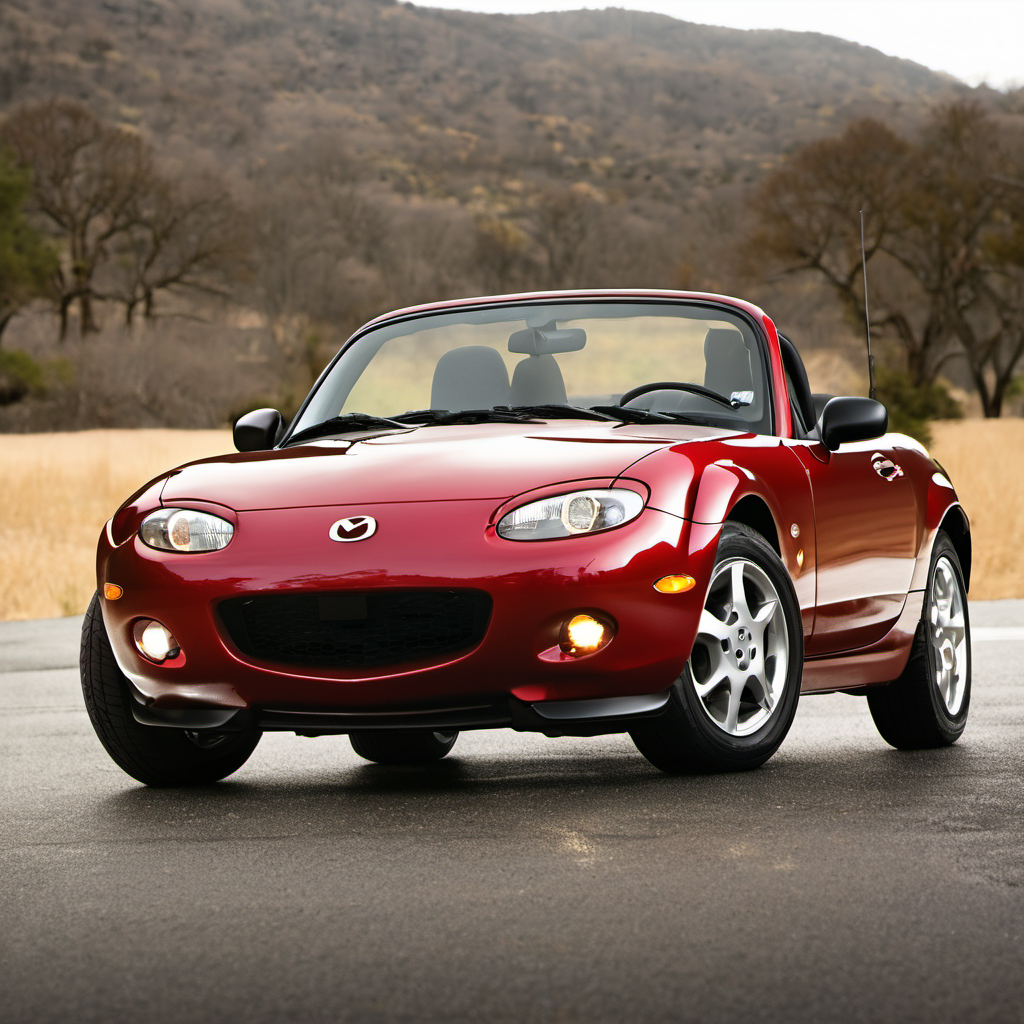
2004 MAZDA MX-5 Miata Convertible

2004 MAZDA

MX-5 MiataConvertible

Convertible

The 2004 Mazda MX-5 Miata is the second-generation (NB) version of the world's best-selling two-seat roadster. By 2004 Mazda had refined the NB chassis into a polished, predictable sports car — the 1.8L four-cylinder was smooth and responsive, the 5-speed manual gearbox was one of the best in the business, and the suspension tuning struck a balance that made even novice drivers feel confident. At just over 2,400 lbs, it handles more like a go-kart than a car. This generation introduced revised styling over the original NA Miata and added modest safety and convenience upgrades. Power was adequate rather than blistering — 142 hp — but the Miata's reputation was never built on straight-line speed. It was built on the pure, unfiltered connection between driver and road, and the NB delivers that in spades. As a 20-year-old convertible in Wisconsin, rust and soft-top condition are the dominant concerns. These cars are driven enthusiastically and many have lived outside, so a thorough undercarriage inspection is mandatory before purchase. The good news: mechanically, the BP-Z3 engine and drivetrain are extremely durable with routine care.

Reliability
4/5
Verified data
Specs shown for MX-5 Miata — the most common configuration. Other trims may vary in engine, drivetrain, or fuel economy. Sign in to see your vehicle's exact specs.
Engine
[object Object]
Drivetrain
RWD
Fuel
Premium gasoline
MPG
20 city / 26 hwy / 22 combined
Seats
Doors
Body
Two Seaters

Overview

AI-curated

The 2004 Mazda MX-5 Miata is the second-generation (NB) version of the world's best-selling two-seat roadster. By 2004 Mazda had refined the NB chassis into a polished, predictable sports car — the 1.8L four-cylinder was smooth and responsive, the 5-speed manual gearbox was one of the best in the business, and the suspension tuning struck a balance that made even novice drivers feel confident. At just over 2,400 lbs, it handles more like a go-kart than a car. This generation introduced revised styling over the original NA Miata and added modest safety and convenience upgrades. Power was adequate rather than blistering — 142 hp — but the Miata's reputation was never built on straight-line speed. It was built on the pure, unfiltered connection between driver and road, and the NB delivers that in spades. As a 20-year-old convertible in Wisconsin, rust and soft-top condition are the dominant concerns. These cars are driven enthusiastically and many have lived outside, so a thorough undercarriage inspection is mandatory before purchase. The good news: mechanically, the BP-Z3 engine and drivetrain are extremely durable with routine care.

Known for
  • Exceptional driver engagement and near-50/50 weight distribution
  • Lightweight 1.8L engine that rewards high-rpm driving
  • One of the most satisfying manual gearboxes in any car at any price
  • Strong enthusiast community and widely available aftermarket support
  • Surprisingly solid long-term reliability when maintained
Best for
  • Driving enthusiasts who prioritize fun over practicality
  • Warm-weather weekend cruising and autocross
  • Budget-friendly entry into sports car ownership
  • Owners comfortable with a second vehicle for daily use
Watch for
  • Rust on sills, floor pans, and frame rails — severe in Wisconsin salt environments
  • Soft top condition: tears, leaks, and broken latches are common at this age
  • High-mileage examples driven hard on track without proper maintenance logs
  • Power steering rack leaks on higher-mileage cars

Common issues by mileage

6 known

Rust on sill panels, floor pans, and frame rails

high
Typically appears
All mileages — age and salt exposure are the primary drivers
Estimated repair
$500 – $4,000

Soft top leaks, tears, and worn weather stripping

high
Typically appears
All mileages on 20-year-old convertible tops
Estimated repair
$300 – $1,200

Oxygen sensor failure / VTCS check engine light

medium
Typically appears
80–150k mi
Estimated repair
$150 – $400

Power steering rack leak

medium
Typically appears
100–150k mi
Estimated repair
$400 – $900

Catalytic converter degradation

medium
Typically appears
100–180k mi
Estimated repair
$350 – $800

Worn shifter bushings and transmission linkage

medium
Typically appears
80–150k mi
Estimated repair
$80 – $250

Maintenance schedule

  1. 1
    Every 5,000 miles or 6 months Engine oil and filter change

    The BP 1.8L runs clean on conventional or full-synthetic 5W-30. More frequent changes help on a 20-year-old engine and protect against sludge buildup from short-trip driving.

  2. 2
    Every 30,000 miles or 3 years Coolant flush

    Wisconsin freeze-thaw cycles accelerate coolant degradation. Verify freeze protection to at least -34°F going into each winter.

  3. 3
    Every 2 years Brake fluid flush

    Brake fluid is hygroscopic and absorbs moisture over time, lowering boiling point. Critical if the car sees any spirited driving or track days.

  4. 4
    Every 30,000 miles Spark plugs

    The 1.8L is sensitive to plug condition. Fresh plugs maintain crisp throttle response and protect the catalytic converter.

  5. 5
    Every 30,000–45,000 miles Differential fluid change

    The rear differential is often skipped at quick-lube shops. Fresh gear oil prevents premature wear on a sports car that sees enthusiastic driving.

  6. 6
    Every spring and fall Soft top and weather stripping inspection and treatment

    Wisconsin winters are brutal on rubber seals. Inspect for tears and apply a UV/vinyl protectant in spring; ensure seals are supple heading into winter to prevent leaks during snow and ice.

  7. 7
    Every 2–3 weeks during winter, full inspection each spring Undercarriage wash and inspection

    Road salt in Lake Geneva destroys floor pans and sill rails. Frequent washing and an annual rust inspection can catch problems before they become structural.

  8. 8
    Every fall before winter Battery load test

    The Miata's small battery compartment fits a compact battery. Cold-cranking capacity drops sharply below 10°F — a marginal battery that starts fine in September may strand you in January.

Always defer to the manufacturer's service manual for warranty-mandated intervals.

Cost of ownership

Annual maintenance
$400 – $900
Fuel
Regular unleaded works despite the EPA listing; expect roughly $1,200–$1,800/year at typical Wisconsin driving distances and current fuel prices.
Insurance
Generally affordable — expect $800–$1,400/year for full coverage on a 20-year-old sports car, depending on your driving record and how the car is classified (pleasure/seasonal use can lower premiums significantly).

The Miata is one of the cheaper sports cars to own and maintain. Parts are plentiful, labor is straightforward, and independent shops can handle nearly everything. The big wildcard on a 2004 Wisconsin car is rust remediation — budget $500–$2,000 upfront if the undercarriage hasn't been treated. Seasonal-use owners who store the car over winter also save meaningfully on fuel and wear.
Seasonal care

Lake Geneva, WI
Winter
  • Do not drive on salted roads if avoidable — the Miata's exposed sills and floor pans rust quickly and repair costs climb fast. Consider winter storage.
  • If storing, disconnect the battery or use a trickle charger/maintainer through the cold months. Small batteries lose charge rapidly in sub-zero temps.
  • Before storage, do a fresh oil change so acidic combustion byproducts don't sit in the engine all winter.
  • Store with the soft top up and supported — leaving it folded for months in the cold can crack the rear window and stress the vinyl.
  • Verify coolant freeze protection is rated to at least -34°F before temperatures drop.
  • Refill washer fluid with a -20°F or colder rated formula — standard fluid will freeze in the lines and crack the reservoir.
Summer
  • Check tire pressure monthly — summer heat causes pressure to rise; consult the door placard and adjust when cold.
  • Inspect the A/C system before warm weather — the cabin heats quickly with the top up, and refrigerant leaks are common on 20-year-old systems.
  • Top-down driving means more UV exposure to the dash and seats; use a windshield sunshade when parked and treat leather or vinyl with a UV protectant.
  • Watch coolant temperature on hot days, especially in traffic — the small radiator can struggle if the electric fan relay or thermostat is weak.
  • Inspect soft top for sun-related cracking each spring before the driving season begins.

Comparable vehicles

2004 Honda S2000
2004 Honda
S2000

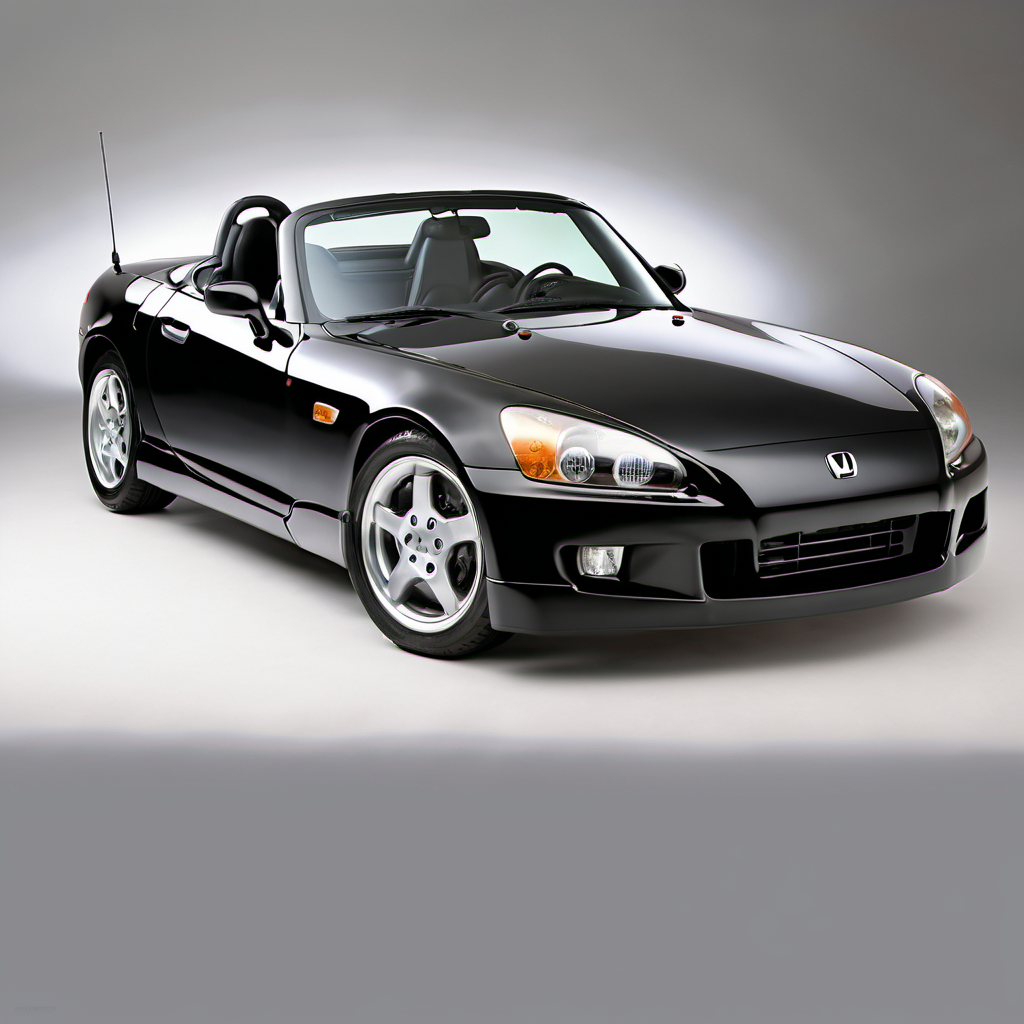
Same two-seat RWD roadster mission, but the S2000's 2.0L VTEC makes significantly more power and revs higher. More demanding to drive well; higher parts cost and more expensive to insure, but comparable fun factor.
2004 Toyota MR2 Spyder
2004 Toyota
MR2 Spyder

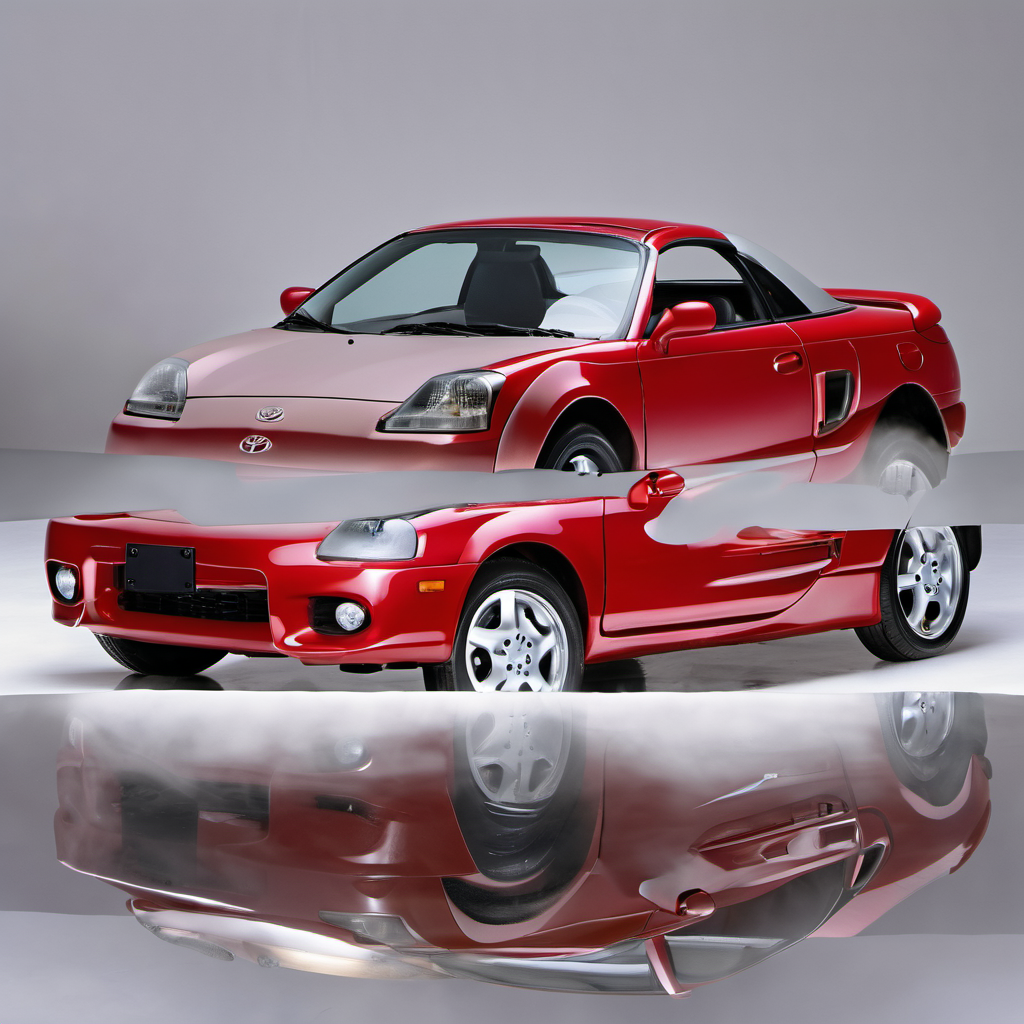
Another lightweight two-seat roadster from the same era, mid-engine RWD layout. Slightly less power than the Miata, but great handling. Parts are harder to find and the convertible top mechanism has its own quirks.

2004 BMW
Z3

RWD two-seat roadster in the same price range used. The Z3 offers more power options (4-cyl or 6-cyl) and a more premium interior, but maintenance costs are significantly higher and rust is also a concern on older examples.

No catalog match
2004 Pontiac
Solstice

Not quite — the Solstice launched in 2006. The closest GM alternative in this era would be a late-model Saturn Sky or used Pontiac Firebird, both RWD two-seat sports cars at similar used price points with different trade-offs in practicality and reliability.

No catalog match

If you're shopping for one

Red flags
  • Any bubbling paint or rust scale on the sill panels or lower door edges — this almost always means worse rust underneath.
  • Soft top with a cracked or yellowed rear window — replacement tops run $300–$1,200 installed.
  • No maintenance records and high mileage — the BP engine is durable but not indestructible without oil changes.
  • Evidence of track use (worn-out brake pads to the metal, heavily heat-cycled rotors) without corresponding maintenance upgrades.
  • Mismatched paint panels suggesting prior collision repair — frame geometry matters on a sports car chassis.
  • Strong mildew or mold smell inside the cabin — indicates long-term water intrusion and possible floor pan damage.
What to inspect
  • Crawl under the car and inspect the sill rails, floor pans, and jacking points for rust — poke with a screwdriver; soft spots mean structural rust that's expensive to fix.
  • Open and close the soft top several times; check for tears, gaps at the header, and whether the rear window is clear and uncracked.
  • Look for water stains on the carpets or musty smell inside — a leaking top leads to wet floors and eventual floor pan rust.
  • Check for power steering fluid on the rack boots and subframe — leaks are common past 100k mi.
  • Test drive with the top up at highway speed and listen for wind noise or roof movement, which indicates worn latches or seals.
  • Request maintenance records — specifically look for timing belt and coolant service history.
  • Check that the differential and transmission shift smoothly with no grinding; worn shifter bushings are cheap to fix but indicate overall maintenance level.
AI profile generated 7 days ago · claude-sonnet-4-6 · v2.