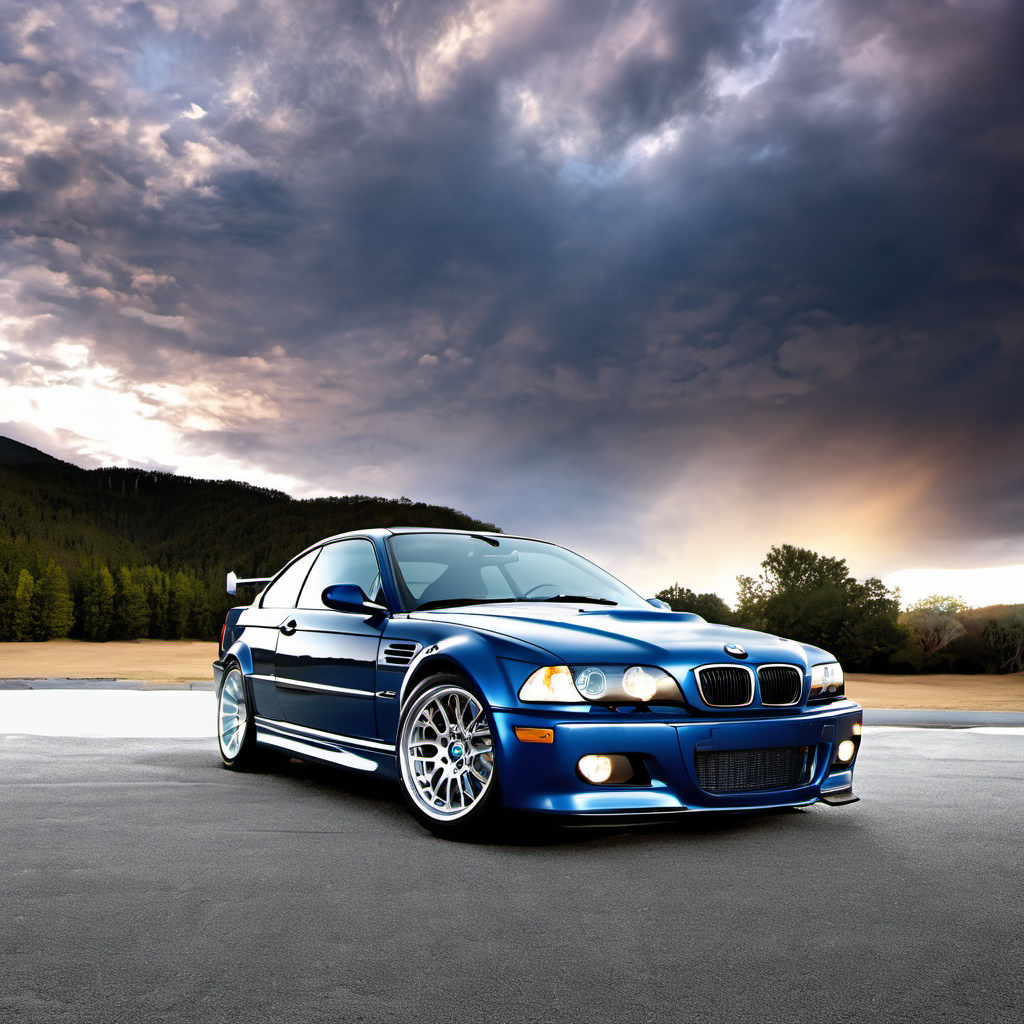
2003 BMW M3 Coupe

2003 BMW

M3Coupe

3.2L S54 I6 · Coupe

The 2003 BMW M3 Coupe is the E46-generation M3, widely regarded as one of the finest driver's cars BMW has ever produced. Powered by the hand-built S54 inline-six, it delivers a high-revving, naturally aspirated experience that remains a benchmark for sports car engagement more than two decades later. At its core, the E46 M3 is a purpose-built performance machine — rear-wheel drive, a limited-slip differential, and a suspension tuned for precision. The 6-speed manual (or optional SMG paddle-shift) connects the driver directly to a 333-hp engine that loves to rev past 7,000 rpm. It is a car that rewards skill and punishes neglect. Ownership is not passive. The S54 engine and the rest of the car demand attentive, scheduled maintenance from an owner who understands they bought a performance vehicle, not a commuter. Find a well-documented, properly maintained example and it is enormously rewarding. Find a neglected one and the repair bills will be swift and substantial.

Reliability
3/5
Verified data
Engine
3.2L S54 I6
Drivetrain
RWD
Fuel
Gasoline
MPG
16 city / 24 hwy / 19 combined
Seats
4
Doors
2
Body
Coupe
MSRP
$46,900

Overview

AI-curated

The 2003 BMW M3 Coupe is the E46-generation M3, widely regarded as one of the finest driver's cars BMW has ever produced. Powered by the hand-built S54 inline-six, it delivers a high-revving, naturally aspirated experience that remains a benchmark for sports car engagement more than two decades later. At its core, the E46 M3 is a purpose-built performance machine — rear-wheel drive, a limited-slip differential, and a suspension tuned for precision. The 6-speed manual (or optional SMG paddle-shift) connects the driver directly to a 333-hp engine that loves to rev past 7,000 rpm. It is a car that rewards skill and punishes neglect. Ownership is not passive. The S54 engine and the rest of the car demand attentive, scheduled maintenance from an owner who understands they bought a performance vehicle, not a commuter. Find a well-documented, properly maintained example and it is enormously rewarding. Find a neglected one and the repair bills will be swift and substantial.

Known for
  • Hand-built S54 3.2L inline-six revving to 8,000 rpm
  • Near-perfect 50/50 weight distribution and driver-focused chassis
  • One of the most celebrated naturally aspirated BMW engines ever made
  • Precise, communicative steering and suspension tuning
  • Strong collector and enthusiast following keeping values elevated
Best for
  • Driving enthusiasts who prioritize handling and driver engagement
  • Owners willing and able to budget for premium maintenance
  • Weekend/track use alongside a daily driver
  • Collectors seeking an appreciating modern classic
Watch for
  • Rod bearing failure on the S54 — the single biggest mechanical risk
  • VANOS (variable valve timing) wear causing rough idle and power loss
  • SMG pump and actuator failures on paddle-shift cars
  • Subframe and rear trailing arm bushing cracking, especially on driven examples
  • Deferred maintenance histories — this engine punishes skipped oil changes

Common issues by mileage

6 known

S54 Rod Bearing Wear / Failure

high
Typically appears
40–100k mi
Estimated repair
$1,800 – $4,500

VANOS Unit Wear (Variable Valve Timing)

high
Typically appears
60–120k mi
Estimated repair
$600 – $1,800

Valve Timing Solenoid / Oil Control Valve Failure

medium
Typically appears
60–120k mi
Estimated repair
$300 – $900

Rear Subframe / Trailing Arm Bushing Cracking

high
Typically appears
60–150k mi
Estimated repair
$800 – $2,500

SMG (Sequential Manual Gearbox) Pump & Actuator Failure

medium
Typically appears
50–120k mi
Estimated repair
$1,200 – $3,500

Oxygen Sensor / Heater Circuit Failure

medium
Typically appears
80–150k mi
Estimated repair
$200 – $600

Maintenance schedule

  1. 1
    Every 5,000–6,000 miles — do not stretch to BMW's OBC intervals Engine oil and filter change using full-synthetic 10W-60

    The S54's rod bearings are oil-starved when old or degraded oil is used. Shorter intervals and the correct viscosity are the single most effective thing you can do to prevent a catastrophic bearing failure.

  2. 2
    Once at purchase if history is unknown; otherwise every 40–60k miles Rod bearing inspection or preventative replacement

    This is the M3 community's most critical preventative job. Bearing wear is often silent until failure. If you don't have documentation proving it's been done, budget for it immediately.

  3. 3
    Every 60,000 miles or at first sign of rough cold idle, hesitation, or power loss VANOS seals and solenoid inspection

    VANOS seals harden with age. Worn seals cause timing codes, rough idle, and reduced power. Rebuild kits are affordable; labor is the main cost. Catching it early avoids broader valve train wear.

  4. 4
    Every 40,000 miles or at any alignment appointment Rear subframe and trailing arm bushing inspection

    E46 M3 subframes are known to crack at the mounting points, especially on cars driven hard or tracked. Cracked subframes are a safety issue and significantly more expensive to fix than catching worn bushings early.

  5. 5
    Every 50,000 miles or every 4 years Coolant system inspection (thermostat, expansion tank, hoses)

    The E46 cooling system uses plastic components that become brittle with age. A blown expansion tank or failed thermostat can lead to rapid overheating — lethal for a high-compression performance engine.

  6. 6
    Every 30,000–40,000 miles Differential and transmission fluid change

    BMW does not list these as maintenance items but the fluids do degrade. Fresh fluid protects the LSD clutch packs and gearbox synchronizers, which are expensive to rebuild.

  7. 7
    Every 2 years regardless of mileage Brake fluid flush

    Brake fluid is hygroscopic. On a high-performance car that may see track use or aggressive driving, degraded fluid raises the risk of brake fade. This is a cheap service with significant safety payoff.

  8. 8
    Every 30,000 miles Spark plug replacement

    The S54 runs a high compression ratio and rewards fresh plugs with strong idle quality and fuel efficiency. Worn plugs can mask misfires that owners attribute to other issues.

Always defer to the manufacturer's service manual for warranty-mandated intervals.

Cost of ownership

Annual maintenance
$1,500 – $4,000
Fuel
Premium 91+ octane required. Expect $2,800–$4,200/year at typical Wisconsin driving distances and current fuel prices.
Insurance
Expect $1,400–$2,400/year depending on driver age, record, and coverage level. Specialty/agreed-value insurance worth considering given collector appreciation.

The E46 M3 is affordable to buy compared to newer performance cars but expensive to own. Routine annual maintenance — oil, brakes, filters, fluids — runs $1,500–$2,500 at an independent shop. Factor in a rod bearing job ($1,800–$4,500) or VANOS rebuild ($600–$1,800) every several years, and a realistic annual budget is $2,000–$4,000 in a normal year, with occasional high spikes. Parts availability is good through the aftermarket, which helps keep independent-shop labor costs reasonable compared to the dealer.

Seasonal care

Lake Geneva, WI
Winter
  • Do NOT use this car as a daily winter driver in Wisconsin — RWD, low ground clearance, and summer or performance tires are a serious liability on salted, snowy roads.
  • If the car must be driven in winter, install a dedicated set of winter tires on steel or sacrificial wheels; never use all-season tires on performance cars.
  • Salt and road brine are extremely corrosive to the E46 undercarriage, subframe mounting points, and brake components. Rinse the undercarriage thoroughly after any winter exposure.
  • Use a battery tender if storing — the S54 ECU and alarm system draw parasitic current and a weak battery will not survive a Wisconsin winter in storage.
  • Switch to a 5W-40 or 5W-60 full synthetic if operating in sustained sub-zero temperatures to aid cold starts and immediate oil pressure to the rod bearings.
  • Ensure coolant mix is tested for at least -34°F protection before the season begins.
Summer
  • Check tire pressure every 2 weeks — Wisconsin summer heat causes significant pressure swings in high-performance tires that affect handling balance.
  • Inspect the cooling system before summer: expansion tank, thermostat, and hoses should be in good shape. Heat soak at idle or in traffic is a real concern with a performance-tuned cooling system.
  • A/C refrigerant and cabin filter should be serviced in spring — the M3's compact engine bay retains heat and a malfunctioning A/C makes traffic miserable.
  • Check brake pad depth before summer track days or spirited driving. Performance brakes wear faster when used correctly.
  • Inspect the differential fluid if you do any track or autocross events — fluid temps spike significantly under sustained performance use.

Comparable vehicles

If you're shopping for one

Red flags
  • No oil change records or vague service history — walk away or price a full engine rebuild into the offer.
  • Milky oil or coolant residue on the oil cap — potential head gasket issue.
  • SMG warning lights, jerky shifts, or 'limp mode' behavior — SMG repair can exceed $3,000.
  • Any sign of subframe cracking, structural repair, or non-OEM subframe reinforcement plates that weren't professionally installed.
  • Knocking or ticking from the bottom end, especially under load — rod bearing failure in progress.
  • Salvage or rebuilt title — insurance and resale complications, and structural repair quality is unknown.
  • Modified intake, exhaust, or ECU tune without documented professional installation — can mask or cause underlying issues.
What to inspect
  • Request a full pre-purchase inspection (PPI) from an independent BMW specialist — this is non-negotiable on an E46 M3.
  • Ask specifically whether rod bearings have been inspected or replaced, and get documentation. If the seller can't answer, price that job in immediately.
  • Listen for VANOS rattle on cold start (a distinctive metallic ticking that fades as the engine warms). Present = VANOS service needed.
  • Inspect the rear subframe mounting points for cracks in the body sheet metal — jack up the rear and look at the four subframe pickup points from below.
  • Test the SMG (if equipped) through all paddle-shift modes and check for jerky engagement or warning lights. SMG repairs are expensive and parts availability is tightening.
  • Check for oil leaks at the valve cover gasket, VANOS unit, and oil filter housing — common seepage points on the S54.
  • Pull a Carfax and look for any track or autocross event records, which indicate higher stress use requiring more scrutiny of bearings and suspension components.
AI profile generated 9 days ago · claude-sonnet-4-6 · v2.